

Single Tooth Implant vs Dental Bridge: Choosing What’s Best for You
Losing a single tooth can affect how you smile, chew, and feel about your appearance. This page explains the difference between a single tooth implant vs dental bridge to restore function and aesthetics, then compares their durability, comfort, maintenance, and long-term value. Whether you’re beginning your research or ready to plan treatment, you’ll find clear insights and practical considerations to help you decide between a single tooth implant vs bridge and understand what separates tooth implant vs dental bridge choices in everyday life. Throughout, we present unbiased information on bridges vs dental implants and dental implants vs dental bridges so you can make a confident, informed decision that suits your goals, lifestyle, and budget.
What Is a Single Tooth Implant?
A single tooth implant replaces a missing tooth from root to crown with a strong, lifelike restoration designed to function like a natural tooth. It includes three key parts: a biocompatible titanium or Ceramic Zirconia implant post or that fuses with your jawbone, an abutment that connects the post to the prosthetic, and a custom porcelain crown crafted to match your smile.
Your implant journey typically begins with a comprehensive evaluation and digital imaging. The implant post is placed into the jawbone and allowed to heal during a process called osseointegration, which creates a stable foundation. After the implant integrates, the abutment is attached, and a custom crown is fitted with attention to colour, contour, and bite alignment. Minimally invasive techniques and precise planning help maximize predictability and comfort at every step.
Implants offer several compelling advantages for single tooth replacement. They help preserve bone density by stimulating the jaw, support the natural spacing of neighbouring teeth, and provide dependable chewing function. Because the crown is custom-fabricated, your restored tooth looks and feels natural and, with proper care, can last for decades. When comparing tooth implant vs dental bridge solutions, implants are a freestanding option that does not rely on adjacent teeth for support.
What Is a Dental Bridge?
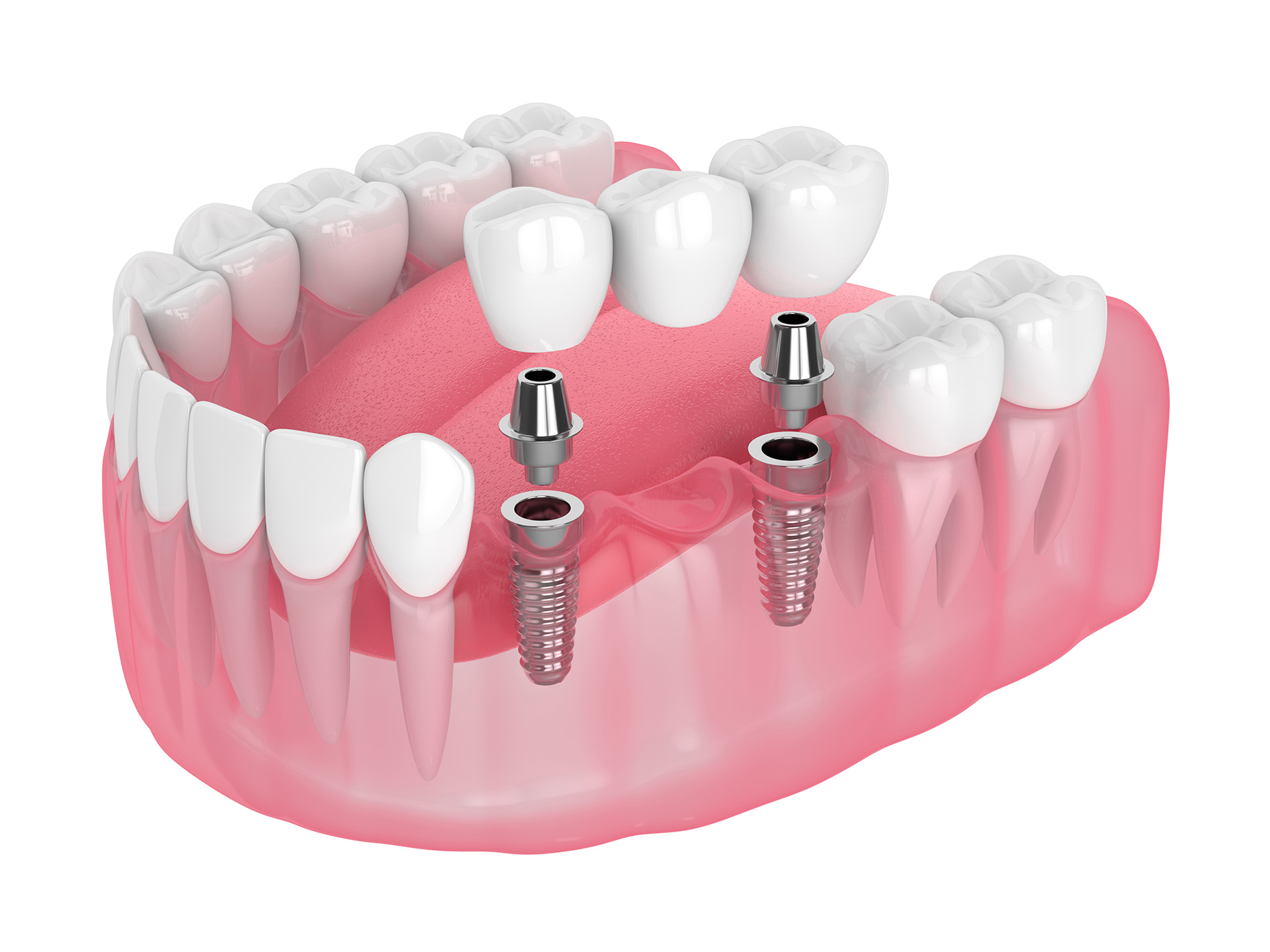
A dental bridge is a reliable, fixed solution that replaces a missing tooth by connecting an artificial tooth (pontic) to adjacent teeth for support. Bridges are designed to blend seamlessly with your smile, using materials and shades that match your natural teeth. Common bridge types include:
- Traditional bridges, which use crowns on both teeth next to the gap to hold the pontic.
- Cantilever bridges, supported by a single adjacent tooth when space or tooth position limits traditional support.
- Maryland (resin-bonded) bridges, which utilize a discreet metal or ceramic framework bonded to the backs of supporting teeth.
The bridge process typically begins with a detailed assessment and imaging to ensure precision. Supporting teeth are prepared as needed, and accurate impressions or digital scans are taken. A custom temporary bridge is placed while your final restoration is fabricated. Once the permanent bridge is ready, it is fitted, adjusted for comfort and bite, and securely bonded.
Choosing a bridge offers practical benefits. It quickly restores chewing function and speech clarity, fills the gap to help maintain facial contours, and prevents neighbouring teeth from drifting out of alignment. For patients evaluating a single tooth implant vs bridge or considering broader questions like dental implants vs dental bridges, a well-designed bridge can be an efficient solution tailored to specific timelines and clinical needs.
Single Tooth Implant vs Bridge: A Side-by-Side Comparison
Durability and longevity often guide decisions. A properly placed dental implant integrates with your jawbone, creating a secure foundation that can last decades with routine care. Because implants are independent of adjacent teeth, they avoid placing additional stress on them. Traditional bridges rely on neighbouring teeth for support, which can contribute to wear or require future replacement, particularly if the supporting teeth change over time. In the context of bridges vs dental implants, implants generally involve fewer compromises to surrounding tooth structure over the long term.
Impact on surrounding teeth and oral health is equally important. Implants are freestanding, so they don’t require reshaping healthy adjacent teeth, helping preserve natural enamel and tooth structure. They also stimulate the jawbone, supporting facial contours and reducing the risk of bone loss that can occur after a tooth is missing. Bridges, while effective, may involve modifying neighbouring teeth for crowns or bonding frameworks. When weighing tooth implant vs dental bridge options, many patients value the conservative nature of implants that protect healthy teeth.
Function and aesthetics influence daily comfort. Implants provide strong bite efficiency, allowing you to enjoy a broad range of foods confidently. The custom crown is designed to match your surrounding teeth in colour and shape, creating a seamless appearance. Bridges can also deliver natural aesthetics when carefully designed; however, some patients prefer the individual, “single-tooth” appearance of an implant crown compared to the connected feel of a multi-unit restoration. These considerations are central to dental implants vs dental bridges discussions, helping you determine which solution aligns with your preferences.
Costs and Value: Implants vs Bridges
Understanding the investment helps you make a long-term decision with confidence. A single tooth implant typically includes the implant post, the abutment, and the custom crown. National averages often range from $3,000 to $5,500 per tooth, depending on imaging, surgical complexity, materials, and whether bone grafting or tissue optimization is needed. When comparing a single tooth implant vs bridge, consider not only the initial price but also how each option supports bone health and protects adjacent teeth.
Dental bridges are generally priced per unit, the replacement tooth plus the supporting crowns or bonded wings, with totals commonly between $2,000 and $4,000, influenced by the number of units, materials, and the extent of preparation. While the initial cost of a bridge can be lower than an implant, bridges may involve reshaping adjacent teeth and can require more frequent replacement or adjustments over time. Evaluating bridges vs dental implants from a value standpoint involves balancing upfront costs against longevity, maintenance, and impact on oral health.
Insurance plans may cover portions of both implants and bridges, especially the crown or prosthetic components, based on your benefits and medical necessity. Many patients also explore flexible financing options, including monthly payment plans. Whether you prioritize durability, aesthetics, convenience, or budget, comparing dental implants vs dental bridges in detail can clarify which path offers the best overall value for your goals.
How to Decide: Factors to Consider for Your Smile
Choosing between a single tooth implant vs bridge depends on your unique clinical and lifestyle factors. Important considerations include the condition of adjacent teeth, jawbone density, gum health, your aesthetic priorities, and how each option supports long-term function. An implant replaces the missing tooth root and crown without involving neighbouring teeth, often helping preserve bone and natural tooth structure. A bridge can restore your smile quickly by using adjacent teeth for support, which may be advantageous in certain clinical scenarios or when bone volume is limited.
A thorough consultation may include digital imaging, bite analysis, and a detailed review of your medical and dental history. You can discuss candidacy, expected timelines, and cost considerations, outlining each step from preparation through placement and final restoration. When reviewing tooth implant vs dental bridge choices, evidence-based recommendations should focus on comfort, aesthetics, durability, and your individual goals.
Care and maintenance are straightforward with both options. Consistent home care, brushing twice daily, flossing or using interdental aids, and routine professional cleaning, helps protect your investment. Implants benefit from excellent gum care and regular checkups to monitor the surrounding tissues and the integrity of the implant components. Bridges require careful cleaning around and beneath the pontic to keep gums healthy and prevent plaque buildup. Clear maintenance guidance is helpful when comparing dental implants vs dental bridges so you can keep your restored smile strong and attractive for years to come.
Key Takeaways
Both solutions are effective, but the best choice depends on your oral health, priorities, and timeline. A single tooth implant is freestanding, helps preserve bone, and often offers superior longevity. A dental bridge restores the gap efficiently by using neighboring teeth for support and may suit cases with limited bone or specific anatomical considerations. Reviewing bridges vs dental implants and a single tooth implant vs bridge side by side, considering durability, oral health impact, aesthetics, maintenance, and cost, can help you select the solution that fits your needs with confidence.