
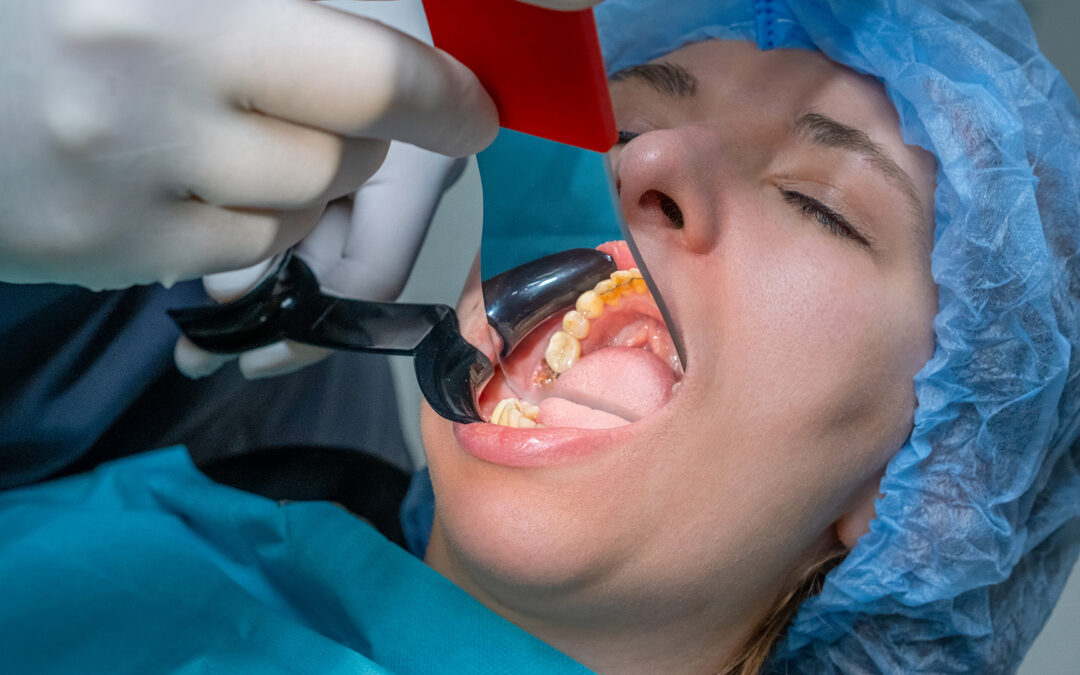
Having several teeth removed in a single visit can feel overwhelming, but a well-coordinated plan helps most patients recover smoothly. Our team works closely with general dentists and oral surgeons to streamline care, reduce discomfort, and support successful healing and future restoration. Here’s what to know before, during, and after multiple dental extractions at once, including guidance on what to do after teeth removal.

When Are Multiple Extractions Recommended?
Removing several teeth at the same time may be advised for:
- Extensive decay or infection that cannot be resolved with root canals or crowns
- Advanced periodontal disease resulting in loose or painful teeth
- Orthodontic plans that require space for proper alignment and bite correction
- Impacted, nonfunctional, or compromised teeth that threaten overall oral health
Consolidating extractions can shorten total treatment time and limit the number of anesthetic appointments. Before recommending multiple dental extractions at once, your provider reviews your medical history, including heart or lung conditions, diabetes, bleeding disorders, pregnancy, and any prior anesthesia concerns. Share a complete list of medications and supplements, especially blood thinners, bisphosphonates, and steroids. Because smoking slows healing and raises the risk of dry socket, you may be advised to stop before surgery and throughout recovery.
Each tooth is evaluated with an exam and imaging. Prognosis, infection risk, bone support, and the tooth’s role in your bite are weighed against alternatives such as root canal therapy, periodontal treatment, or orthodontic movement. The final plan specifies which teeth to remove, the extraction sequence, and how those spaces will be restored after each removed tooth has healed sufficiently.
How Many Teeth Can Be Extracted in One Session?
The safe number depends on the complexity of each extraction, appointment length, your overall health, and the type of anesthesia. Many patients comfortably have two to four simple extractions with local anesthesia. More extensive surgical cases may be split into staged visits, or completed under IV sedation or general anesthesia with an oral surgeon, sometimes involving an entire arch. Patients often ask how many teeth can be extracted at once. The answer is individualized, and your clinician will outline a plan that balances comfort, safety, and goals.
Planning must align with your restorative or orthodontic goals:
- Dental implants: Immediate placement may be possible in select sites with healthy bone and no active infection. More commonly, a healing period of about 8 to 12 weeks or longer is recommended before implant placement, particularly after removing molar teeth.
- Dentures: Immediate dentures can be placed on the day of extraction or after healing. Expect adjustments as the gums and bone remodel around each removed tooth site.
- Orthodontics: Tooth movement typically resumes after soft tissue healing and completion of space-creating extractions, often within a few weeks.
If you are considering multiple dental extractions at once, discuss exactly how many teeth can be extracted at once in your situation and whether removing molar teeth changes the timing of implants, dentures, or braces.
What to Expect During the Procedure
Your team will review anesthesia options to match your needs. Local anesthesia numbs the treatment area. Nitrous oxide offers relaxation with rapid recovery. Oral sedation helps reduce anxiety. IV sedation or general anesthesia may be used for extensive or surgical cases. With adequate anesthesia, you should feel pressure but not sharp pain.
A multiple-extraction visit typically includes:
- Preoperative review and updated imaging
- Administration of anesthesia or sedation with continuous monitoring
- Atraumatic loosening and removal of teeth using instruments or minor surgical techniques, including special steps when removing molar teeth
- Socket care, including cleaning, smoothing bone, and placing grafts if planned
- Bleeding control with gauze pressure, sutures, and hemostatic agents
- Placement and adjustment of an immediate denture or provisional when indicated
Immediate risks are usually low and managed during the visit. Your team will control bleeding, provide tailored pain relief guidance, and review written instructions and emergency contact details. Temporary numbness, nausea related to sedation, or soft tissue irritation can occur after a removed tooth or when several teeth are taken out together.
Aftercare, Recovery, and When to Seek Help
For the first 24 to 48 hours, here is what to do after teeth removal to support clot formation and comfort:
- Bite gently but firmly on gauze for 30 to 60 minutes to control bleeding, replacing as directed.
- Keep your head elevated and apply cold packs on the face in 15-minute intervals during the first day to limit swelling.
- Avoid spitting, drinking through straws, or smoking to protect the blood clots and reduce dry socket risk.
- Choose soft, cool foods such as yogurt, eggs, mashed potatoes, and spooned smoothies.
- Resume gentle brushing the night of surgery, avoiding the sockets. Begin warm saltwater rinses after 24 hours, 3 to 4 times daily.
Pain control often involves alternating acetaminophen with an anti-inflammatory as instructed. Take prescribed antibiotics exactly as directed if they are provided. If you had sedation, arrange a ride home and avoid driving, alcohol, strenuous activity, and legal decisions for at least 24 hours. Keep following your clinician’s guidance on what to do after teeth removal as healing progresses.
Typical recovery includes mild to moderate soreness for 2 to 3 days and swelling that peaks around 48 to 72 hours. Contact your provider promptly if you experience any of the following:
- Bleeding that continues to soak gauze for more than two hours despite firm pressure
- Severe or worsening pain after day 3, which may indicate dry socket
- Fever over 100.4°F, a foul taste, or increasing swelling that could suggest infection
- Persistent numbness, or difficulty swallowing or breathing
Most soft tissue healing occurs within two weeks, while bone remodeling continues over several months. Follow-up visits allow your provider to monitor healing, remove sutures if needed, and adjust dentures or retainers. Implant planning typically begins around the two-week check and proceeds when bone and soft tissues are ready. If orthodontic treatment is part of your plan, timing will be coordinated so tooth movement resumes safely and efficiently after any removed tooth sites have stabilized.