A sinus lift, or sinus augmentation surgery, is a procedure that adds bone to the upper back jaw to make dental implants possible and predictable. If you have been told there is not enough bone height for implants near the molars or premolars, a sinus lift may be the safest way to create the support your implants need. Below is what the procedure involves, why it is recommended, and what to expect from start to finish. Understanding why you may need a sinus lift can help you plan the best path to successful implant treatment.
What Is a Sinus Lift (Sinus Augmentation)?
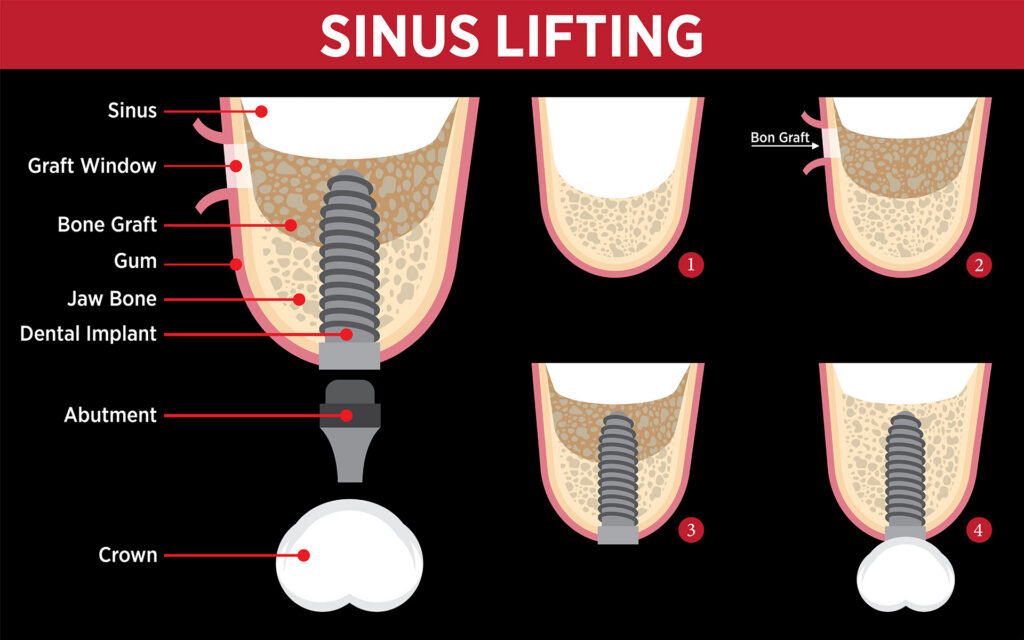
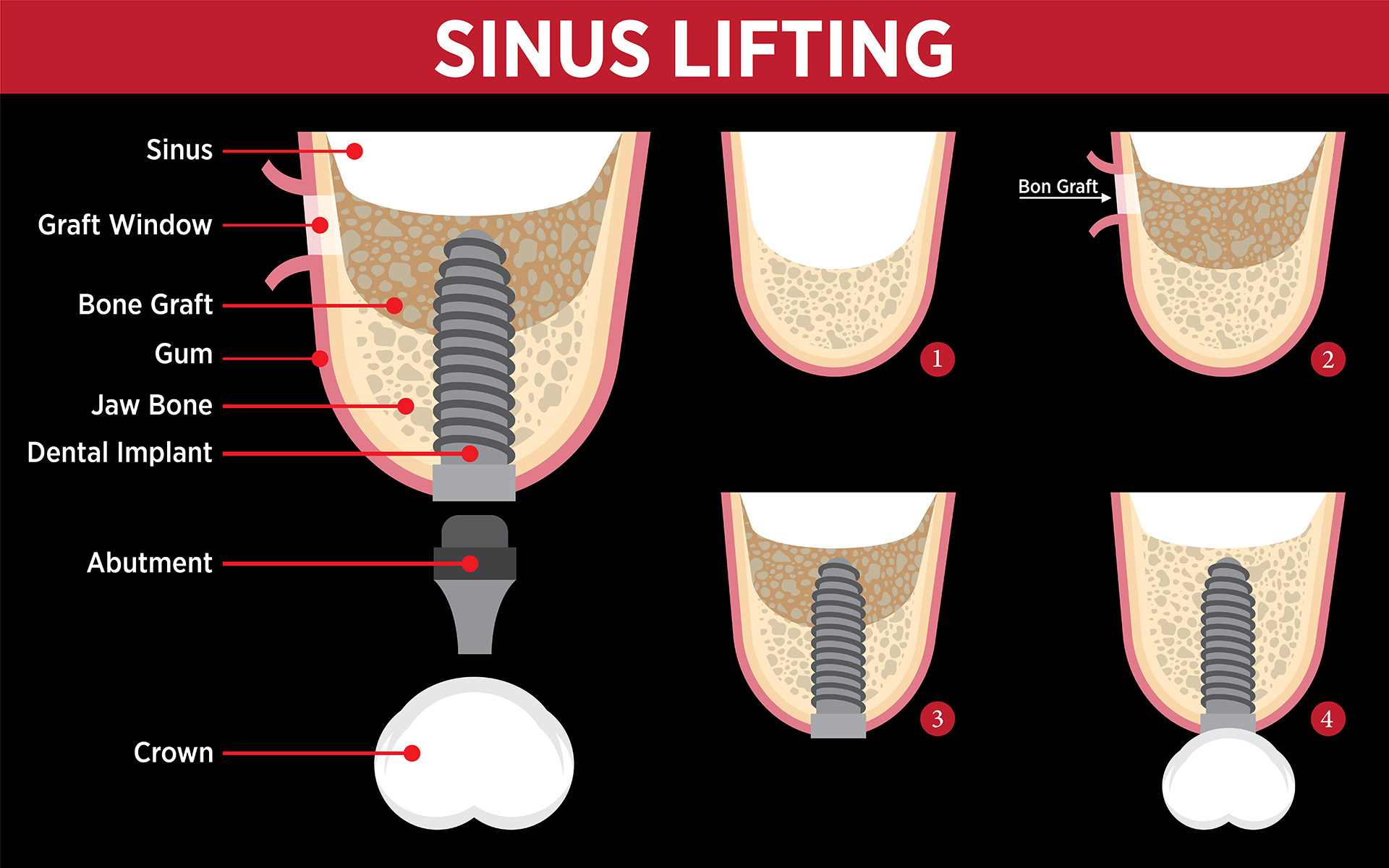
A sinus lift is a surgical procedure that elevates the membrane lining the maxillary sinus and places bone graft material beneath it. By carefully lifting the sinus floor, your oral surgeon or periodontist increases bone height in the posterior maxilla (upper back jaw), creating a stable foundation for dental implants.
The maxillary sinuses are air-filled spaces above your upper molars and premolars. After losing a back tooth, the bone in this area often shrinks over time. The sinus can also expand downward, leaving too little bone height for implant placement. Structures in this region include the Schneiderian (sinus) membrane, adjacent tooth roots, and the alveolar ridge where implants are anchored.
Two main techniques are used:
- Lateral window approach: Chosen when very little bone height remains. A small opening is created on the side of the upper jaw, the sinus membrane is lifted, and graft material is placed underneath.
- Crestal (osteotome) approach: A less invasive method performed through the implant site when only a modest increase in bone height is needed.
Your provider selects the approach based on your bone measurements, sinus anatomy, and implant plan. In both methods, sinus augmentation surgery is tailored to your anatomy to maximize bone gain and minimize risk.
Why You May Need a Sinus Lift
Several factors can reduce bone height in the upper back jaw. Common causes include prior tooth loss, periodontal (gum) disease, long-term denture wear that accelerates ridge resorption, and natural bone remodeling with age. Over time, these changes can leave the ridge too short or thin for stable implant placement. Understanding why you may need a sinus lift begins with evaluating these changes on three-dimensional imaging.
When bone height is insufficient, placing an implant without augmentation raises the risk of complications such as implant instability, sinus membrane perforation, or inadequate osseointegration (bone-implant fusion). A sinus lift adds vertical bone height so implants can be placed safely and predictably. This is a key reason why you may need a sinus lift prior to implant therapy.
Your surgeon may also recommend sinus augmentation surgery due to anatomical variations (such as a low-lying or large sinus), previous trauma that damaged the bone, or when planning implant-supported restorations like bridges or full-arch prostheses in the upper jaw. In each case, the goal is to achieve enough bone volume so implants can function like natural tooth roots.
What to Expect: Before, During, and After Treatment
Before surgery: Your team will review your medical history, medications, allergies, and sinus health, and take advanced imaging such as cone-beam computed tomography (CBCT). These scans measure bone height and width, map sinus anatomy, and guide a personalized plan, including the number, size, and position of planned implants.
During the procedure: You will receive local anesthesia, and many patients choose oral or IV sedation for comfort. For a lateral window sinus lift, a small opening is created in the side of the upper jaw, the sinus membrane is gently lifted, and graft material is placed beneath it. For a crestal approach, the membrane is elevated through the implant site using specialized instruments. Graft options include autograft (your own bone), allograft (donor bone), xenograft (bovine or porcine), or synthetic materials. The site is closed with sutures. In selected cases, the dental implant can be placed at the same time; otherwise, implant placement is delayed until the graft matures.
After surgery: Mild swelling, bruising, minor bleeding, and a feeling of sinus pressure or stuffiness are common for a few days. You will receive instructions on medications, rinsing, and activity restrictions, including avoiding nose blowing and straws, sneezing with your mouth open, and sleeping with your head elevated. Contact your provider if you notice persistent or worsening pain, significant bleeding, fever, foul taste or discharge, or signs of a sinus infection.
Healing Timeline and When Implants Can Be Placed
Healing occurs in stages as the graft integrates and new bone forms. If primary implant stability is achievable, some patients receive an implant immediately (simultaneous placement). In other cases, implants are placed after the graft matures. Many patients require 4 to 9 months before implant placement, depending on the amount of augmentation and the graft material used during sinus augmentation surgery.
Factors that influence healing include the graft type and volume, overall health and nutrition, tobacco use, sinus health (including allergy control), and oral hygiene. Following all post-operative instructions and attending review visits helps protect the graft and may shorten the overall timeline.
Typical follow-up includes a visit at 1 to 2 weeks for suture removal and site checks, and periodic reviews at 2 to 4 months with imaging when appropriate. A CBCT or targeted scan confirms bone gain and sinus membrane health before implant placement. Your surgical and restorative teams coordinate timing to support long-term success.
Costs, Risks, Benefits, and Alternatives
The cost of a sinus lift varies based on case complexity, the technique used (lateral window or crestal), the type and amount of graft material, anesthesia or sedation needs, and the surgeon’s fees. Insurance may contribute when the procedure is considered medically necessary, but coverage differs widely. Your treatment coordinator can provide an itemized estimate and discuss financing options.
All surgeries carry risks. Potential issues include sinus membrane perforation, infection, graft failure or insufficient bone formation, postoperative sinusitis, and rare events such as prolonged bleeding. Experienced clinicians minimize these risks using detailed imaging, careful technique, appropriate graft selection, and thorough post-operative care. If a membrane tear occurs, it can often be repaired during the procedure; if not, the site may be allowed to heal before attempting the lift again.
When successful, a sinus lift delivers adequate bone for stable, well-positioned implants, improving chewing efficiency, comfort, and long-term oral function. If a sinus lift is not the best fit for you, alternatives may include short implants in areas with adequate bone, angled implants to avoid the sinus, zygomatic implants for complex cases, ridge preservation at the time of extraction, or non-implant options such as hybrid prostheses or conventional dentures. Your provider will compare these choices so you can select the solution that aligns with your goals and health.
Is a Sinus Lift Right for You?
If you are missing upper back teeth and have been told there is not enough bone for implants, a sinus lift can create the foundation needed for a durable, natural-feeling result. With modern imaging, refined surgical techniques, and coordinated care, most patients experience predictable healing and excellent outcomes. Schedule a consultation to review your scans, discuss your options, and design a plan tailored to your needs. If you are wondering why you may need a sinus lift, a thorough evaluation will clarify whether sinus augmentation surgery, an alternative approach, or a combination of treatments is the best path to restore your smile.