
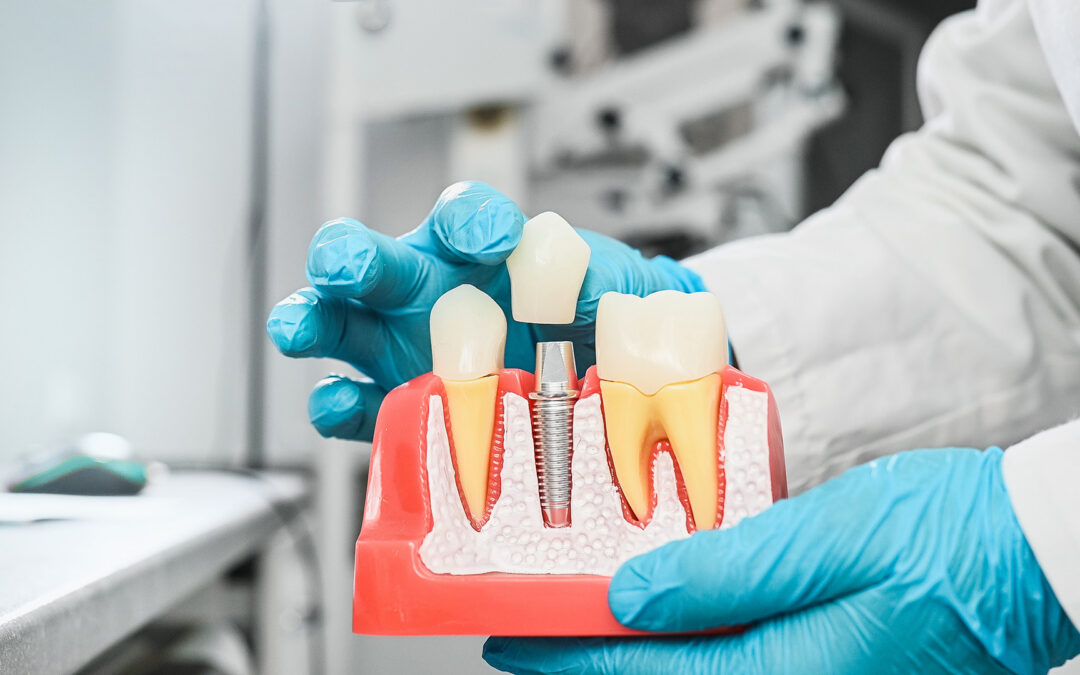
If you are weighing options to replace missing teeth, dental implants and traditional dentures are likely at the top of your list. Both restore your smile, but implants often deliver a more secure, natural, and long-lasting result. Understanding why dental implants are better than dentures, and how each option affects comfort, function, and oral health, can help you make a confident choice.
Understanding Dental Implants and Dentures
Dental implants are small titanium posts placed in the jawbone to act as artificial roots. After the implant integrates with the bone, a custom abutment and crown are attached to recreate the look and function of a natural tooth. Implants can replace a single tooth, support a bridge for several teeth, or anchor a full arch with implant-supported dentures.
Dentures are removable appliances that replace missing teeth and surrounding tissues. Full dentures sit on the gums to replace all teeth in an arch, while partial dentures attach to remaining natural teeth with clasps. They are typically made of acrylic with or without metal frameworks and rely on suction, adhesives, or clasps for stability.
The major difference is how they interact with your bite and bone. Implants anchor into bone and become part of your chewing system, offering fixed stability and helping maintain bone volume. Dentures rest on the gums without direct bone anchorage, which can make them less stable and allow bone shrinkage over time. This distinction influences comfort, chewing power, speech, and long-term oral health, and is central to understanding why dental implants are better than dentures for many patients.
Benefits of Dental Implants
Stability and comfort are immediate advantages of implants. Because they are anchored in bone, they do not slip when you talk or eat, eliminating the need for adhesives and reducing sore spots. Many people say implants feel like their own teeth, which boosts confidence in social and professional settings.
Implants also support long-term oral health by preserving jawbone density. Natural tooth roots stimulate the jaw with every bite; when teeth are lost, the bone can shrink. Implants mimic that stimulation, helping maintain facial structure and preventing the sunken look sometimes associated with extended denture wear. Unlike some traditional bridges, implants do not require reshaping healthy neighboring teeth.
From an aesthetic standpoint, implant crowns are designed to match your natural teeth in shape, size, and color. Functionally, implants offer strong biting efficiency, making it easier to enjoy a wider variety of foods, from crisp fruits to lean meats, without worry. This combination of natural appearance and dependable function is a key reason many patients prefer implants over dentures.
Dental Implants vs. Dentures: Key Differences
Daily care and maintenance vary significantly between the two options.
- Dental implants: Brush twice daily, clean between teeth with floss or a water flosser, and see your dentist regularly, similar to caring for natural teeth.
- Dentures: Remove and clean daily, soak overnight, and handle carefully to avoid warping or breakage. Removable dentures may need periodic relines as the jawbone changes.
Cost is another important consideration. Dentures usually have a lower upfront price. However, long-term costs can include adjustments, relines, repairs, and replacement every five to seven years. Implants carry a higher initial investment but are designed as a long-term solution. By helping preserve bone and stabilizing your bite, implants may reduce future interventions related to bone loss and changes in fit, potentially lowering lifetime costs.
In everyday life, implants typically provide a more natural experience. Chewing efficiency is higher, which supports better nutrition and greater meal variety. Speech is often clearer because implants prevent the movement that can cause clicking or lisping. Comfort improves as there is no acrylic covering the palate or pressing on the gums. For many, these practical benefits weigh heavily when considering why dental implants are better than dentures in real-world use.
| Feature | Dental Implants | Dentures |
| Stability | Fixed in bone; do not slip | Rest on gums; may shift |
| Bone Health | Helps maintain jawbone | Does not prevent bone loss |
| Chewing Efficiency | High; near natural teeth | Lower; limits certain foods |
| Maintenance | Brush and floss like natural teeth | Remove, clean, and soak daily |
| Longevity | Designed for long-term use | Replacement typically every 5–7 years |
| Upfront Cost | Higher | Lower |
| Comfort | No acrylic palate; minimal gum pressure | Acrylic base; may cause sore spots |
Who Is a Good Candidate for Dental Implants?
Ideal candidates have healthy gums, adequate jawbone volume, and a commitment to good oral hygiene. Even if bone loss has occurred, procedures like bone grafting or sinus augmentation can often make implants possible. Non-smokers, or those willing to pause smoking during healing, tend to have higher success rates since smoking can impair blood flow and slow recovery.
Certain medical conditions may influence planning. Uncontrolled diabetes, active periodontal disease, or immune-compromising conditions can affect healing and integration. Many patients with well-managed health issues can still pursue implants with a customized plan. A comprehensive evaluation, including dental imaging and a review of your medical history, helps determine suitability and the best approach.
Age is not a barrier. Younger adults with fully developed jaws and older adults seeking a more stable alternative to dentures can both benefit. Your dental history, including extractions, bone changes, or years of denture wear, will guide whether single implants, implant-supported bridges, or full-arch implant solutions are recommended. A consultation with an experienced provider will outline timelines, costs, and expected outcomes tailored to your goals.
Choosing What Works Best for You
Dental implants offer unmatched stability, bone preservation, and natural function, making them a strong choice for many patients comparing why dental implants are better than dentures. That said, every smile and budget is unique. A personalized evaluation will help you understand your options, weigh short- and long-term costs, and choose the path that fits your health, lifestyle, and expectations. Discuss your goals with a dental professional to decide whether implants, dentures, or a combination such as implant-supported dentures is the right fit for you, and to clearly see why dental implants are better than dentures for many, but not all, situations.